
Simple somatic yoga exercises to foster mind-body connection


Feeling stiff, stressed, or stuck in your own body?
It’s pretty common these days, with demanding desk jobs, stressful news cycles, and so little time to work out. If you’ve ever thought, “I just need something gentle that works AND fits into my day,” somatic yoga might be just what you’re looking for.
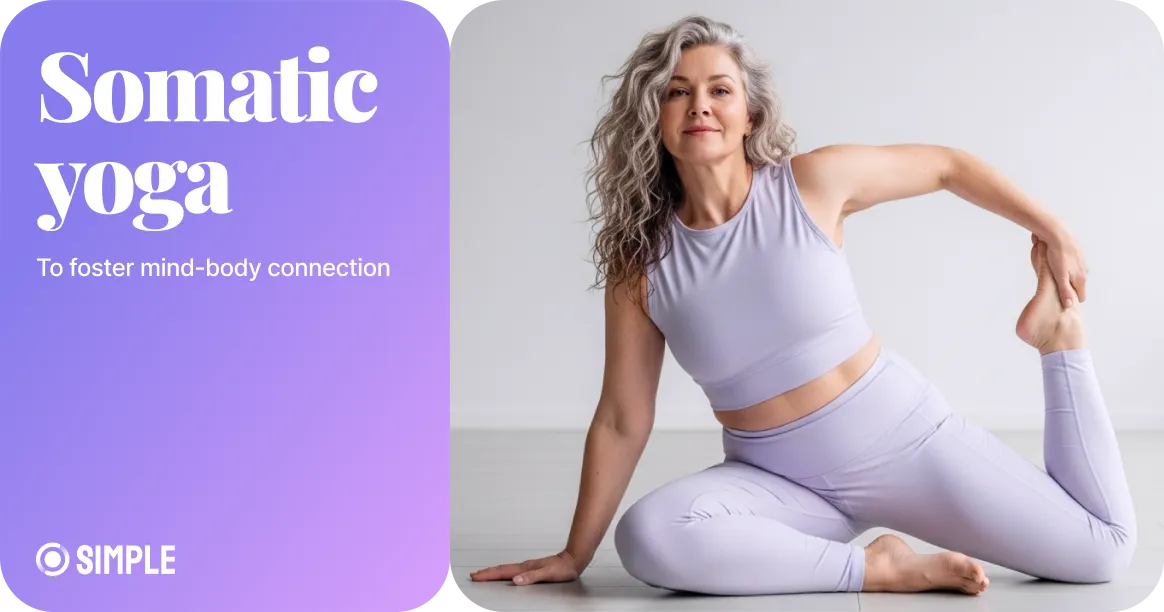
Somatic yoga isn’t just stretching in slow motion. These exercises help you rewire how your brain and body communicate—releasing chronic tension, calming your nervous system, and reconnecting you with sensations you didn’t even realize you’d lost.[1–3]
Whether you’re healing from pain, recovering from burnout, or just craving a slower, more intentional way to move, somatic yoga offers a grounded, science-informed practice that meets you where you are.[4, 5]
This approach invites you to slow down, listen in, and feel your body with greater awareness—especially in areas like the lower back, knees, and shoulders, where we often hold pain and tension.
Let’s explore what somatic yoga is, why it works, and the simple movements that can help you feel at home in your body.
What is somatic yoga?
Somatic yoga is a unique, movement-based practice that blends traditional yoga with somatics—a therapeutic approach that helps retrain your brain’s connection to how your muscles move and feel.[3, 7] At its heart, somatic yoga is all about tuning in: gently increasing your awareness of every sensation inside your body through slow, intentional movements.[7]
It’s grounded in key principles like:
-
Interoception—noticing internal sensations such as your breath, heartbeat, or any discomfort.
-
Exteroception—sensing the world around you, like the feel of the floor beneath you or the temperature of the room.
-
Proprioception—understanding where your body is in space, helping with balance and movement.
By weaving these principles into yoga postures and mindful breathing, somatic yoga creates a powerful mind-body connection.[7] This makes it especially helpful for anyone feeling disconnected from their body because of stress, pain, or past trauma.[1, 2, 4–6, 8]
If you’ve ever wondered, “What is somatic yoga, and could it help me?” this practice offers a gentle, effective way to rediscover your body’s wisdom and move with renewed ease.
Benefits of somatic yoga
Boosts mind-body awareness
Somatic yoga trains you to tune into your body’s signals right now—your breath, heartbeat, and muscle tension. As this awareness grows, you gain powerful tools to calm your nervous system and melt away stress.[5, 8] Research shows yoga’s positive effects on the brain, helping you feel more grounded and present.[9] For those with conditions like fibromyalgia and arthritis, somatic yoga can offer real relief through gentle movement.[4, 10]
Reduces chronic pain
Did you know unprocessed emotions can contribute to chronic pain?[11] Somatic yoga’s gentle, focused movements target long-held muscular tightness—especially in the lower back and legs—helping to release that tension and ease discomfort. This makes it a promising approach for managing persistent pain through mindful movement.[4, 6, 8, 12]
Promotes trauma recovery
Somatic yoga creates a safe, supportive space to explore and release tension stored deep in your body—in areas like the belly, head, or shoulders. Studies suggest it can help alleviate symptoms of PTSD and emotional overwhelm by fostering a deeper mind-body connection and emotional regulation.[1, 13]
Improves posture and flexibility
Many chronic aches and pains stem from poor posture and limited flexibility flexibility . Somatic yoga helps strengthen and lengthen key areas like your back, knees, and hips, gently rebalancing your body and enhancing overall mobility.[3, 4]
Enhances balance and mobility
Moving slowly and mindfully sharpens coordination. Somatic yoga exercises retrain muscles essential for balance, making it an ideal, safe choice for beginners, older adults, or anyone recovering from injury.[14, 15]
So, does somatic yoga work? For beginners and seasoned practitioners alike, it offers an accessible, effective way to reduce pain, manage stress, and restore balance, both physically and emotionally.[5, 8, 14]
Top 5 somatic yoga exercises for beginners
1. Easy Pose (Sukhasana)
**How to do it:**Find a comfortable seated position with your legs crossed. Keep your spine tall but relaxed, and soften your shoulders away from your ears. If sitting on the floor is uncomfortable, support your hips with a bolster or folded blanket to ease pressure on your knees and lower back. Rest your hands gently on your knees, close your eyes, and begin tuning into your breath. Notice how the air moves in and out, and gently scan your body for any sensations or tension.
This foundational pose is one of the most accessible somatic yoga moves and encourages stillness, body awareness, and mindful breathing—core pillars for anyone starting somatic yoga. The simple act of sitting with attention cultivates a calm mind and a deepened connection to your body’s signals.
2. Mountain Pose (Tadasana)
**How to do it:**Stand tall with your feet hip-width apart, grounding down evenly through all four corners of your feet. Engage your thighs gently to support your legs, lengthen your spine upward, and release tension by dropping your shoulders away from your ears. Allow your arms to hang naturally by your sides. Close your eyes or keep a soft gaze forward as you feel your breath moving rhythmically along your spine.
This pose is a powerful somatic yoga move that acts like a physical and mental reset button. It’s perfect for checking in with your posture and refining your body’s alignment. With consistent practice, it helps build greater body awareness and stability.
3. Tree Pose (Vrksasana)
**How to do it:**Shift your weight onto one foot while slowly lifting the opposite foot to rest on your inner thigh, calf, or ankle (avoiding the knee joint). Press your standing foot firmly into the ground as you bring your hands together overhead or at heart center. Fix your gaze on a stable point in front of you to help with balance. Hold this pose for several breaths, feeling the subtle shifts in your body as you find steadiness.
Tree Pose cultivates both physical balance and mental focus—key aspects of somatic yoga practice. It gently challenges your mobility and coordination, making it an excellent pose to calm the mind and build confidence in movement.
4. Somatic Pelvic Tilt
**How to do it:**Lie comfortably on your back with your knees bent and feet flat on the floor, hip-width apart. Begin to gently rock your pelvis forward and backward, paying close attention to the sensations in your lower back, belly, and hips. Move slowly and intentionally, using your breath to guide each tilt. Notice any areas of tension or release as you explore these small movements.
This beginner somatic exercise is a subtle yet effective way to relieve tension held in the pelvis and lower back—areas often affected by stress and poor posture. It’s a fundamental part of a somatic yoga routine that helps increase awareness and ease in often-neglected parts of the body.
5. Seated Cat-Cow
**How to do it:**Sit comfortably with your legs crossed or on a chair with feet flat on the floor. Place your hands on your knees or thighs. As you inhale, arch your spine slightly, lifting your chest and gently tilting your pelvis forward (Cow). On the exhale, round your spine, drawing your belly toward your spine and tucking your chin slightly (Cat). Move slowly between these two positions, syncing with your breath and focusing on the sensations along your spine.
This gentle somatic yoga exercise improves spinal flexibility and encourages mindful connection with your back muscles and breath. It’s an accessible pose for beginners to enhance mobility and relieve tension in the spine and shoulders.
Each of these somatic yoga exercises forms a workout that invites you to move with intention and listen deeply to your body’s signals. They form a simple, adaptable somatic yoga sequence perfect for beginners eager to build mind-body connection, reduce tension, and improve overall movement quality.
Tips on how to practice somatic yoga effectively

Diving into somatic yoga can be a truly transformative experience, but like any new practice, it’s best approached with mindfulness and care. Here are some key tips to help you get the most out of your somatic yoga journey:
Start slow and stay curious
Somatic yoga isn’t about striking perfect poses or pushing your limits. Somatic exercise is about tuning in and sensing your body’s messages. Move slowly, gently, and with an open mind. Instead of rushing through movements, stay present and curious about what each sensation tells you.
Use your breath as a guide
Your breath is a powerful barometer for your physical and emotional state. Notice how it changes as you move—if your breath becomes short, tight, or strained, take it as a signal to pause, soften, or slow down.
Try follow-along workouts
If you’re just starting out, use our guided workouts to explore the nuances of somatic movement yoga and somatic yoga techniques. Expert guidance can help you safely explore new movements, avoid injury, and deepen your practice with confidence. You can get started by taking our quiz here.
Practice regularly, even if it’s just for 10 minutes
You don’t need hours on the mat; even a short daily practice can gently build your body awareness, improve posture, and reduce tension over time. Regular, mindful movement is the key to lasting change.
Important note: If you have any underlying health conditions, injuries, or concerns, please check in with your healthcare provider before starting any new lifestyle changes, including somatic yoga. Your safety and well-being come first.

Frequently asked questions
Can I lose weight with somatic yoga?
While somatic yoga isn’t primarily a weight loss tool, it can support healthier habits by reducing stress, balancing hormones, and improving mobility. A more relaxed, connected body is better equipped for sustainable change—and all movement adds up!
What is the difference between somatic yoga and traditional yoga?
Traditional yoga emphasizes poses and alignment. Somatic yoga focuses on internal sensation, movement awareness, and nervous system regulation. It’s less about the shape and more about what your body feels.
Does somatic yoga release trauma?
Practitioners may use somatic yoga to help people cope with the effects of trauma, including anxiety, depression, and PTSD. Through mindful, gentle movement, it can help process emotional blocks and create a sense of safety and control.[2, 3, 8, 13, 16]
Which is better, somatic yoga or pilates?
Both pilates and somatic yoga are great activities for improving strength, flexibility, and body awareness Somatic yoga may place more emphasis on noticing and tuning into your body, but you can bring that same intention to pilates too. Which one is better for you will depend on your goals and what you enjoy!
What is somatic yoga for cortisol detox?
Cortisol is the body’s primary stress hormone. Somatic yoga reduces cortisol levels by activating the parasympathetic nervous system, helping your body relax and recover from chronic stress responses.[1, 5, 8, 13]

- Neal AM. Somatic interventions to improve self-regulation in children and adolescents. J Child Adolesc Psychiatr Nurs 2021; 34: 171–180.
- Wang H, Liu Y, Kwok JYY, et al. The effectiveness of yoga on menopausal symptoms: A systematic review and meta-analysis of randomized controlled trials. Int J Nurs Stud 2025; 161: 104928.
- Ives JC, Sosnoff J. Beyond the mind-body exercise hype. Phys Sportsmed 2000; 28: 67–81.
- Gautam S, Kumar U, Dada R. Yoga and its impact on chronic inflammatory autoimmune arthritis. Front Biosci (Elite Ed) 2021; 13: 77–116.
- Benvenutti MJ, Alves E da S, Michael S, et al. A single session of hatha yoga improves stress reactivity and recovery after an acute psychological stress task-A counterbalanced, randomized-crossover trial in healthy individuals. Complement Ther Med 2017; 35: 120–126.
- Oka T, Lkhagvasuren B. Health-related benefits and adverse events associated with yoga classes among participants that are healthy, in poor health, or with chronic diseases. Biopsychosoc Med 2021; 15: 17.
- Baker IA. Chapter 8: Tibetan yoga: Somatic practice in vajrayāna Buddhism and dzogchen. In: Yoga in Transformation. Göttingen: V&R unipress, 2018, pp. 335–384.
- Sharma M. Yoga as an alternative and complementary approach for stress management: a systematic review. J Evid Based Complementary Altern Med 2014; 19: 59–67.
- Gothe NP, Khan I, Hayes J, et al. Yoga effects on brain health: A systematic review of the current literature. Brain Plast 2019; 5: 105–122.
- Steen JP, Kannan V, Zaidi A, et al. Mind-body therapy for treating fibromyalgia: a systematic review. Pain Med 2024; 25: 703–737.
- Linton SJ. A transdiagnostic approach to pain and emotion: Transdiagnostic approach to pain and emotion. J Appl Biobehav Res 2013; 18: 82–103.
- Meehan E, Carter B. Moving with pain: What principles from somatic practices can offer to people living with chronic pain. Front Psychol 2020; 11: 620381.
- Brom D, Stokar Y, Lawi C, et al. Somatic experiencing for posttraumatic stress disorder: A randomized controlled outcome study. J Trauma Stress 2017; 30: 304–312.
- McCall MC, Ward A, Roberts NW, et al. Overview of systematic reviews: yoga as a therapeutic intervention for adults with acute and chronic health conditions. Evid Based Complement Alternat Med 2013; 2013: 945895.
- Youkhana S, Dean CM, Wolff M, et al. Yoga-based exercise improves balance and mobility in people aged 60 and over: a systematic review and meta-analysis. Age Ageing 2016; 45: 21–29.
- Macy RJ, Jones E, Graham LM, et al. Yoga for trauma and related mental health problems: A meta-review with clinical and service recommendations. Trauma Violence Abuse 2018; 19: 35–57.