
When 'healthy' isn't healthy: what 2,000 people revealed about diet culture

It’s ironic, really.
We start a diet hoping to lose weight, feel healthier, and be more comfortable in our bodies. But dieting behaviors are often anything but healthy. They come wrapped in guilt and shame that pull us further from the very thing we’re aiming for–real health and well-being.

To see just how deep this goes, we surveyed 2,000 people. What we found is that diet culture diet culture isn’t just a little sketchy. It’s downright harmful.
Don’t listen to your body
Hunger is one of the most basic human signals we’ve got. It’s your body’s way of saying, “Hey, fuel me, I’m running low here.” Think of it like the fuel light blinking on your car dashboard. You wouldn’t ignore it and expect your car to keep running.
But diet culture tells us to push that signal away, and even treat doing so as some kind of win. The message is: the less you eat, the better you’re doing.
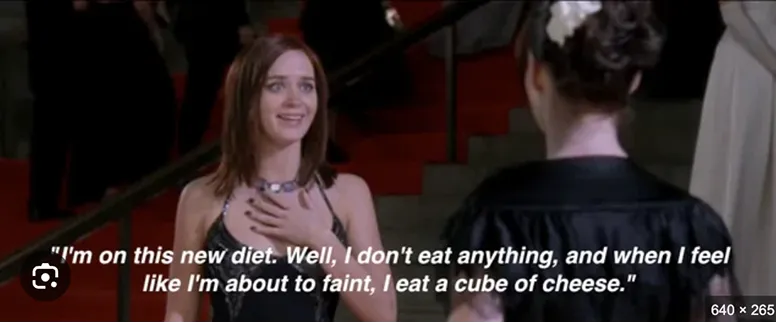
Remember that famous scene in The Devil Wears Prada? When Andi compliments Emily on how slim she looks, Emily says:
“I’m on this new diet. It’s very effective. Well, I don’t eat anything, and when I feel like I’m about to faint, I eat a cube of cheese.”
It’s funny in the movie because it’s so over the top.
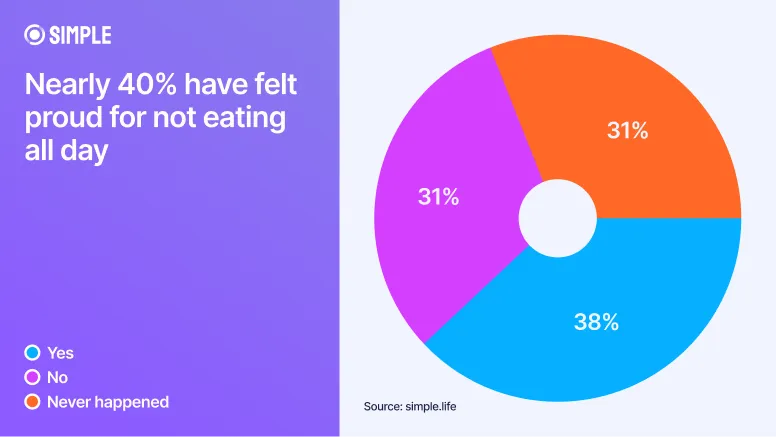
But in our survey, 38% of people admitted they’ve felt proud of not eating all day.
And when “skipping food” becomes a source of pride, the result is exhaustion and irritability.
A recipe for a ruined holiday
Picture this: it’s Thanksgiving. Everyone else is buzzing about food, family, and time together. But you? You’re busy running calorie math in your head.
Diet culture tells us indulgence is NOT allowed … unless you’ve deprived yourself first. Better start crunching those numbers! If you skip breakfast and lunch, that should earn you a few extra roasties at dinner, right?
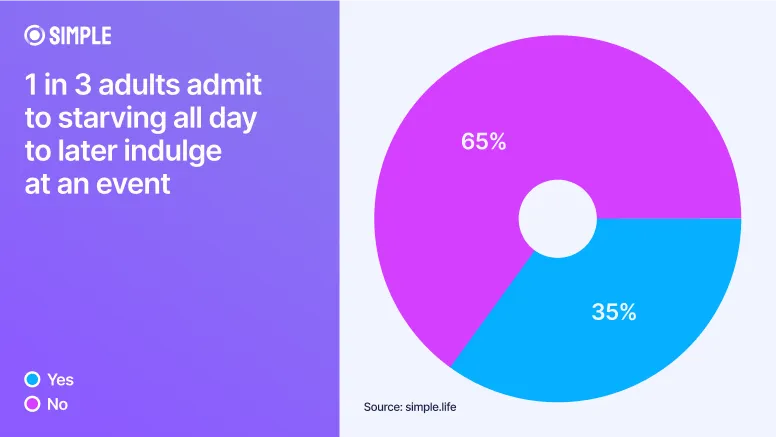
According to our survey, about 35% of people think so, admitting to starving themselves all day so they can indulge later.
The problem is, this kind of bargaining doesn’t just steal the joy from celebrations. It creates a relationship with food built on stress. Meals stop being about connection and comfort, and start being about rules, restrictions, and what you’re “allowed.”
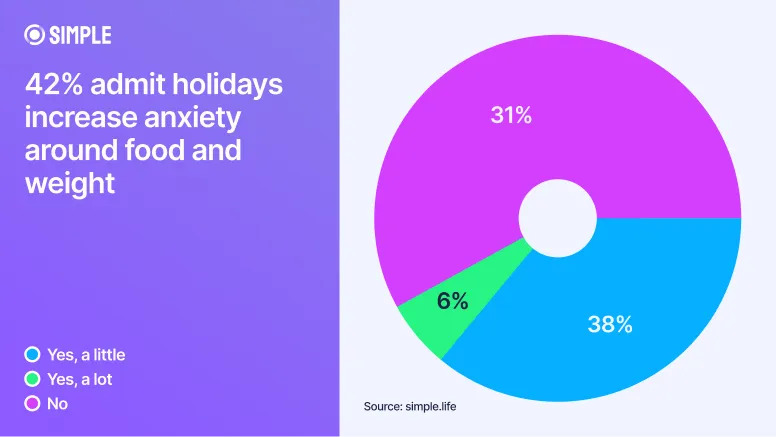
No wonder 42% of people said holidays make them more anxious about food and weight. And nearly a third said they feel pressured to lose weight before gatherings or photos.
Instead of cozy, joyful seasons of connection and comfort, we get a looming sense that our bodies are on display and being judged.
Dieting messes with our heads
Most of us start dieting to gain a greater sense of control and reduce the mental stress we feel around food.
Ironically, it usually has the opposite effect.
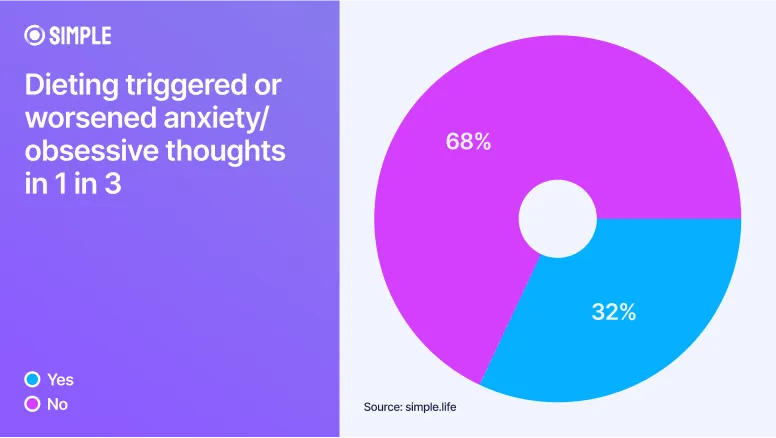
In our survey, one in three people said dieting triggered or worsened their anxiety and obsessive thoughts. What starts as “eating better” quickly spirals into constantly counting calories, weighing every bite, and stressing about slipping up.
As Ro Huntriss, Chief Nutrition Officer at Simple, explains:
“When people are constantly calorie-counting and second-guessing every bite, it affects their mental health. This cycle of fear and fixation is why so many people struggle to maintain a healthy relationship with food.”
Blinky to the rescue!
At Simple, we want to change this negative impact. So we’re creating a different kind of weight loss experience, via a cute, chaotic, fluffball called Blinky. He’s the emotional support fluff you never knew you needed: a weight loss sidekick who cheers you on, makes you laugh, and turns consistency into something fun instead of stressful.
Diet culture won’t celebrate your small wins or cheer you through your off-days, but Blinky will. He’ll squeal over your salads, dance when you work out … and spiral dramatically if you forget to log.
Why? Because consistency is what drives visible results. And in early testing, people with Blinky had a 7% higher chance of losing weight than those without him.
So buckle up! Logging your food, workouts, and other healthy actions just became part comedy show, part accountability buddy, part emotional booster. Take our quiz to grab your personalized plan and meet Blinky today. We think it’ll be love at first log.

Guilt that’s always there
Guilt goes with dieting like peanut butter goes with jelly. They’re a classic pair that no one seems immune to. Once guilt digs its claws in, it drives us into all kinds of unhealthy behaviors.
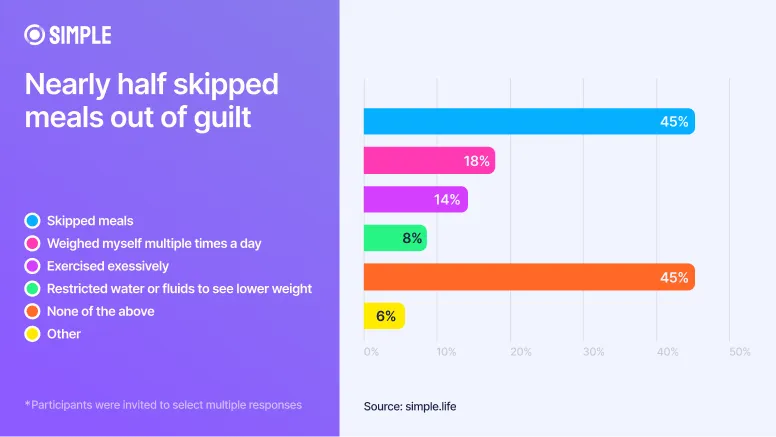
For instance, nearly half of our survey respondents said they’d skipped meals out of guilt, and 18% said that guilt led them to weigh themselves multiple times a day.
14% reported exercising excessively, while 8% went as far as restricting their water intake to see a lower number on the scale, all thanks to guilt.
This is what happens when we follow extreme, restrictive food rules, like “Only eat 1,200 calories.” “Don’t eat carbs after 6 PM.” When we inevitably fail these impossible tasks, guilt is waiting.
That’s why Blinky is such a refreshing change. He doesn’t care if you hit perfect, but that you show up for the journey. If you skip a log, yes, he’ll throw a tiny tantrum, but only because he knows that consistency is the name of the game. Log your meals again, and, regardless of what that meal is or how long it took you to return, he’ll shower you in confetti.
Weight loss at any cost
“I had the stomach flu and lost 10 pounds, I’m so happy!”
We’ve all heard someone say this.
As disturbing as it sounds, it’s not surprising. In our society, thinner bodies are seen as “better.” Diet culture teaches us that losing weight makes you more valuable, more disciplined, more worthy of respect.
So when illness or stress leads to weight loss, it’s seen as a win. If the outcome is a smaller body, the cost doesn’t seem to matter.
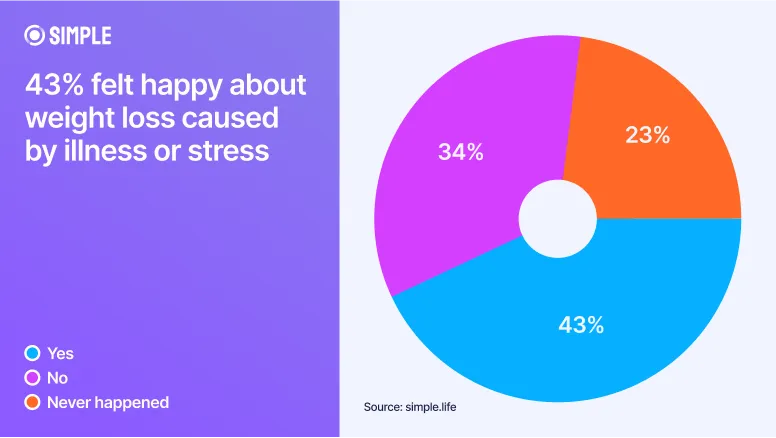
In our survey, 43% of people admitted they’ve felt happy about losing weight from illness or high stress.
Seeing suffering as a pathway to a slimmer body shows just how deeply diet culture can warp our idea of health. It turns real struggles into “success stories” and makes us forget what health should actually feel like: sustainable, safe, and kind to our bodies.
Dieting > survival?
Perhaps one of the most shocking things about the power of diet culture is how it convinces people to put weight loss above their basic needs.
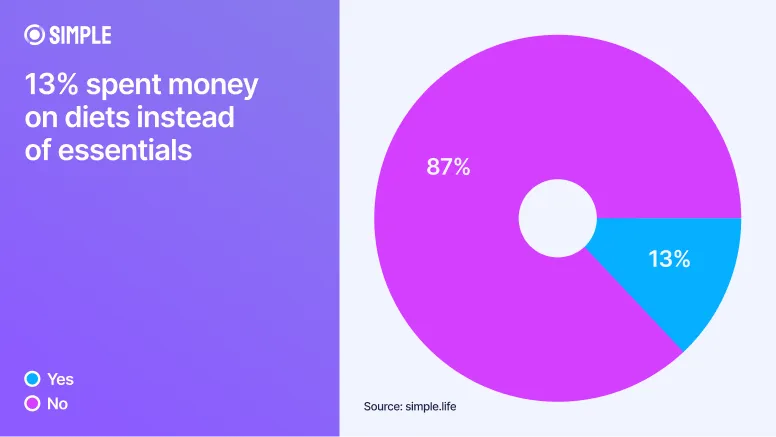
In our survey, 13% of respondents admitted they’ve spent money on diet programs, pills, or supplements instead of essentials like rent, bills, or groceries.
Sadly, it’s the result of constant messaging that losing weight is urgent and worth any sacrifice.
It’s a pretty damning insight into how the diet industry profits from our insecurities when being thin is worth more than having a roof over your head.
Diet culture thrives on comparison
But not just the one between you and your reflection in the mirror. Comparison seeps into our friendships, too.
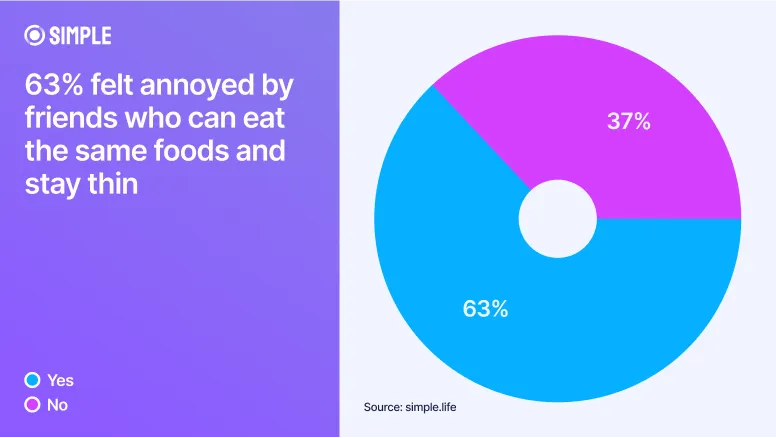
In our survey, 63% of people admitted feeling annoyed when friends eat the same foods yet manage to stay thin.
Suddenly, meals aren’t just meals, they’re competitions, where every plate gets silently measured against another. Instead of bringing us together, shared meals can spark envy and judgment.
And it doesn’t stop there. By glorifying thinness as the ideal and encouraging constant body scrutiny, diet culture shapes the way we talk about our own bodies. When we criticize ourselves, we send subtle messages to others that their bodies aren’t good enough either.
Think about it: if I’m judging my body fat, it feels like I must be judging yours too. Without even meaning to, we reinforce toxic messages about bodies and weight that hurt us and our loved ones. And that’s exactly what makes diet culture so sneaky, and so scary.
Methodology
The data in this report derives from a survey conducted by Simple. The survey was launched in September 2025. In total, 2,000 adults were surveyed, and all respondents took the full survey. All genders, ethnicities and age groups over 18 years old were included in the survey. This survey provides new insights into the unhealthy eating habits statistics that shape modern lives.